B.Sc Artificial Intelligence
- Home
- /
- Academics
B.Sc Artificial Intelligence


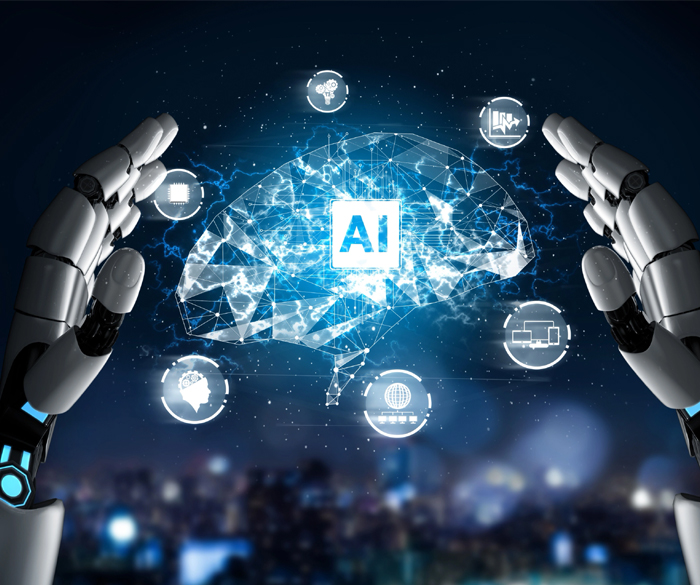
A Bachelor of Science (B.Sc) in Artificial Intelligence (AI) is a degree program designed to provide students with a comprehensive understanding of AI technologies, methods, and applications. Here’s an overview of the course details, curriculum, and career opportunities associated with a B.Sc in AI:
Course Details and Curriculum
Core Subjects
1st Year
- Introduction to Computer Science: Basics of computing, programming, and problem-solving.
- Mathematics for Computer Science: Topics like calculus, linear algebra, and discrete mathematics essential for AI algorithms.
- Programming Fundamentals: Learning programming languages such as Python, Java, or C++.
- Data Structures and Algorithms: Core data structures (lists, trees, graphs) and algorithms for solving computational problems.
2nd Year
- Introduction to Artificial Intelligence: Overview of AI, its history, and fundamental concepts.
- Machine Learning: Supervised and unsupervised learning algorithms, neural networks, and deep learning.
- Statistics and Probability: Statistical methods and probability theory used in data analysis and AI model building.
- Databases and Data Management: Principles of database design, SQL, and data management techniques.
3rd Year
- Natural Language Processing (NLP): Techniques for processing and analyzing human language data.
- Computer Vision: Methods for enabling machines to interpret and process visual information from the world.
- Robotics and Automation: Fundamentals of robotics, sensors, and automation technologies.
- Ethics in AI: Ethical considerations and societal impacts of AI technologies.
Laboratory and Practical Work
- Programming Labs: Hands-on coding assignments to implement algorithms and AI models.
- Machine Learning Projects: Developing and training machine learning models on real-world datasets.
- Data Analysis: Practical exercises in data cleaning, analysis, and visualization.
- AI Applications: Projects involving NLP, computer vision, and robotics.
Elective Subjects (Varies by University)
- Reinforcement Learning: Techniques for training AI agents to make decisions by interacting with environments.
- AI in Healthcare: Applications of AI in medical diagnostics, treatment planning, and healthcare management.
- AI for Business: Use of AI in business analytics, decision-making, and process optimization.
- Human-Computer Interaction: Study of how humans interact with computers and designing user-friendly AI systems.
Research and Projects
- Independent Research: Opportunity to conduct research in specialized areas of AI.
- Group Projects: Collaborative projects to develop AI solutions for real-world problems.
Seminars and Workshops
- Guest Lectures: Talks by AI experts and professionals about current trends and future developments.
- Workshops: Practical sessions on specific AI tools, techniques, or applications.
Career Opportunities
AI Engineer
Develop and implement AI models and algorithms for various applications. Often involves working with machine learning and deep learning frameworks.
Data Scientist
Analyze and interpret complex data to inform decision-making. Involves working with statistical models, data mining, and machine learning.
Machine Learning Engineer
Design, build, and deploy machine learning models. Focuses on optimizing and scaling AI systems for production environments.
Natural Language Processing (NLP) Engineer
Develop algorithms and systems for understanding and generating human language, such as chatbots and language translation tools.
Computer Vision Engineer
Work on technologies that enable machines to interpret and analyze visual data, such as image recognition and autonomous vehicles.
Robotics Engineer
Design and build robotic systems, focusing on automation, control systems, and integration of AI technologies.
AI Research Scientist
Conduct research to advance the field of AI, working in academic institutions, research labs, or tech companies.
Business Intelligence Analyst
Use AI and data analytics to help businesses make strategic decisions and optimize operations.
AI Consultant
Advise organizations on implementing AI solutions, integrating AI technologies into their operations, and addressing related challenges.
Ethical AI Specialist
Focus on the ethical implications of AI technologies, including fairness, accountability, and transparency.
Software Developer
Develop software solutions that incorporate AI technologies for various applications, such as apps, systems, or platforms.
AI Product Manager
Oversee the development and deployment of AI-driven products, coordinating between technical teams and business stakeholders.
Further Studies
Many graduates opt to pursue advanced degrees (M.Sc, M.Tech, M.S., or Ph.D.) in AI, machine learning, data science, or related fields to deepen their expertise and open up additional career opportunities in research, development, and specialized roles.
Overall, a B.Sc in Artificial Intelligence provides a solid foundation in AI principles and applications, preparing students for a wide range of careers in this rapidly growing field.